Industrial Energy Storage: Powering Factories with Solar + Storage
Industrial energy storage — particularly containerized solar-plus-storage systems — addresses all of these challenges simultaneously. Vodloon has designed and deployed over 200 industrial and commercial energy storage projects worldwide, including a 475 kW on-grid solar system in Vietnam.
Why Factories Need Energy Storage
| Pain Point | How Storage Solves It | Financial Impact |
|---|---|---|
| Demand Charges | Battery discharges during peak 15-min demand window, flattening the demand curve | 20–40% reduction in demand charges |
| Time-of-Use Rates | Charges at off-peak (cheap), discharges at peak (expensive) | 15–30% energy cost reduction |
| Power Quality | Inverter provides reactive power compensation and voltage support | Avoids power factor penalties, reduces downtime |
| Grid Outages | Seamless switchover to battery backup keeps production running | Prevents $10K–$100K+ per outage in lost production |
| Carbon Goals | Solar + storage reduces grid energy consumption and carbon footprint | ESG compliance, carbon tax avoidance |
Key insight: For most industrial customers, the demand charge is the single largest line item on the electricity bill — often 30–50% of the total. Cutting peak demand by even 10% through battery discharge can reduce the overall bill by 15–25%.
Containerized Energy Storage Systems
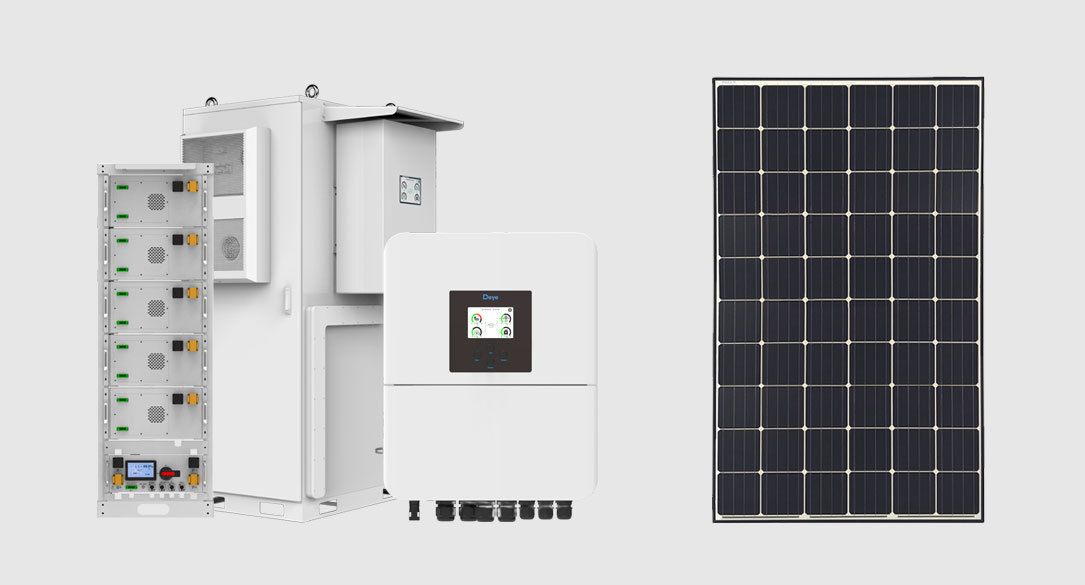
For industrial-scale storage (100 kW – several MW), Vodloon deploys containerized ESS — complete energy storage systems housed in standard 20-foot or 40-foot shipping containers. Everything is pre-assembled and tested at the factory:
- Battery racks — LiFePO4 modules in rack-mounted configurations, typically 200–500 kWh per container
- PCS (Power Conversion System) — bidirectional inverter, 100–500 kW per container
- BMS — battery management system with cell-level monitoring and protection
- EMS — energy management controller with cloud connectivity
- HVAC — climate control system maintaining 20–25°C for optimal battery life
- Fire suppression — aerosol-based or FM-200 clean agent fire suppression system
- Safety systems — smoke detectors, gas sensors, emergency stop, arc-flash protection
The containerized approach offers several advantages over on-site assembly:
- Faster deployment — container arrives pre-commissioned; only concrete pad, cabling, and grid interconnection are needed on-site
- Factory-tested reliability — every system undergoes full load testing before shipping, reducing on-site commissioning risk
- Modular scalability — add containers as demand grows; no need to oversize initially
- Transportable — if a facility relocates or the system is no longer needed, the container can be moved to another site
Case Study: Vietnam 475 kW On-Grid Solar System
In 2023, Vodloon completed a 475 kW on-grid solar installation at an industrial facility in Vietnam. The project demonstrates the full value of industrial solar-plus-storage:
| Parameter | Value |
|---|---|
| Location | Vietnam (industrial facility) |
| System Size | 475 kWp rooftop solar |
| Annual Production | ~640,000 kWh/year |
| Self-Consumption | ~85% (factory daytime load) |
| Grid Export | ~15% (surplus at midday) |
| Annual Savings | ~$70,000/year (energy + demand reduction) |
| CO₂ Reduction | ~530 tons/year |
| Payback Period | ~4.5 years |
The project was delivered turnkey — from system design and engineering to equipment supply, installation supervision, and commissioning. Vodloon's team provided professional consultation during the initial phase, custom solution design, and ongoing technical support.
Sizing an Industrial Storage System
Step 1: Analyze the Load Profile
Obtain 12 months of interval meter data (15-minute or hourly). Identify the peak demand window, its frequency, and magnitude. The storage system should be sized to cover the portion of peak demand above your target demand level.
Step 2: Calculate Required Power and Energy
Power (kW): Target demand reduction × 1.1 (safety margin). Example: if your peak is 500 kW and target is 350 kW, you need 165 kW of battery power.
Energy (kWh): Power × duration of peak window. Most demand charges are based on 15-minute intervals, so 165 kW × 2 hours = 330 kWh minimum. Add 20% margin = ~400 kWh.
Step 3: Evaluate Solar Integration
If the facility has rooftop space, add solar PV to charge the battery during the day and offset daytime consumption. Size the solar array to cover the daytime load plus battery charging. The combination of solar (for energy offset) + storage (for demand management) typically delivers 2–3× better ROI than either alone.
Step 4: Verify Grid Interconnection
Check local grid codes for storage interconnection requirements. Some utilities require specific protection relays, anti-islanding certification, or SCADA integration. Vodloon's engineering team handles this as part of the turnkey delivery.
Vodloon's Industrial ESS Advantages
- Full-chain integration — PACK, BMS, PCS, and EMS all designed in-house, ensuring seamless interoperability
- 12 patented technologies — covering cell balancing, thermal management, and safety algorithms
- 200+ project experience — Vodloon's R&D team has led the design of 200+ industrial and commercial energy storage projects
- ISO-certified quality — manufacturing processes follow Six Sigma standards
- Global certifications — CE, UL, IEC for worldwide compliance
- 24/7 support — round-the-clock customer response and remote monitoring
- Turnkey delivery — from design and engineering to commissioning and O&M
Global Reference Projects
Vodloon's industrial and commercial projects span multiple continents and climates:
| Country | Project | Year |
|---|---|---|
| Vietnam | 475 kW On-Grid Industrial Solar System | 2023 |
| Australia | 25 kW Solar Power Plant | 2024 |
| Philippines | 30 kW Rooftop PV Power Plant | 2019 |
| Thailand | 18.2 kW Residential PV Project | 2021 |
Industrial energy storage is no longer a pilot technology — it is a proven, bankable investment with payback periods of 4–6 years and 25-year asset lifespans. For any factory paying demand charges above $15/kW, the financial case for storage is strong. Add solar to the equation, and the ROI improves further.
Ready to power your factory smarter? Explore Vodloon Industrial Solutions →